

Summary
The ECO-MOSAIC (Ecosystem Monitoring and Scaling for Climate Change Impacts) project develops an open, scalable framework to monitor how climate change alters terrestrial ecosystems across Europe. Building on ESA Climate Change Initiative datasets and other satellite Earth Observation products, the project links Essential Biodiversity Variables and Essential Climate Variables with in-situ monitoring networks and advanced AI models to understand the impact of the climate change extreme event on species distribution. ECO-MOSAIC will generate spatially explicit indicators of ecosystem condition, resilience, exposure, and change at multiple spatial and temporal scales, supporting conservation planning and ambitious climate adaptation policies. The project will co-produce methods and open-source tools for users, ensuring interoperability, transparency, and uptake in policy and practice. Ultimately, ECO-MOSAIC aims to deliver transferable workflow and decision-ready information for scientists, land managers, policy makers worldwide, and other users of ecosystem information across Europe and beyond.
Project Background
ECO-MOSAIC responds to urgent policy and scientific needs at the climate–biodiversity nexus. Policymakers must implement the EU Biodiversity Strategy for 2030 (https://environment.ec.europa.eu/strategy/biodiversity-strategy-2030_en ), the Nature Restoration Law, the European Green Deal, and the Kunming–Montreal Global Biodiversity Framework (https://www.cbd.int/gbf ), all of which require consistent, spatially explicit evidence on ecosystem condition, resilience, and change. However, existing monitoring systems are fragmented, heavily reliant on sparse field data, and often fail to capture rapid, climate-driven shifts in ecosystems across large regions.
Scientifically, it remains challenging to translate heterogeneous data streams – satellite Earth Observation, climate reanalysis, and in-situ biodiversity observations – into robust indicators that can be compared across biomes and time. Key gaps include scalable methods to link Essential Biodiversity Variables and Essential Climate Variables, rigorous uncertainty quantification, and tools to distinguish between natural variability and human- and climate-driven change.
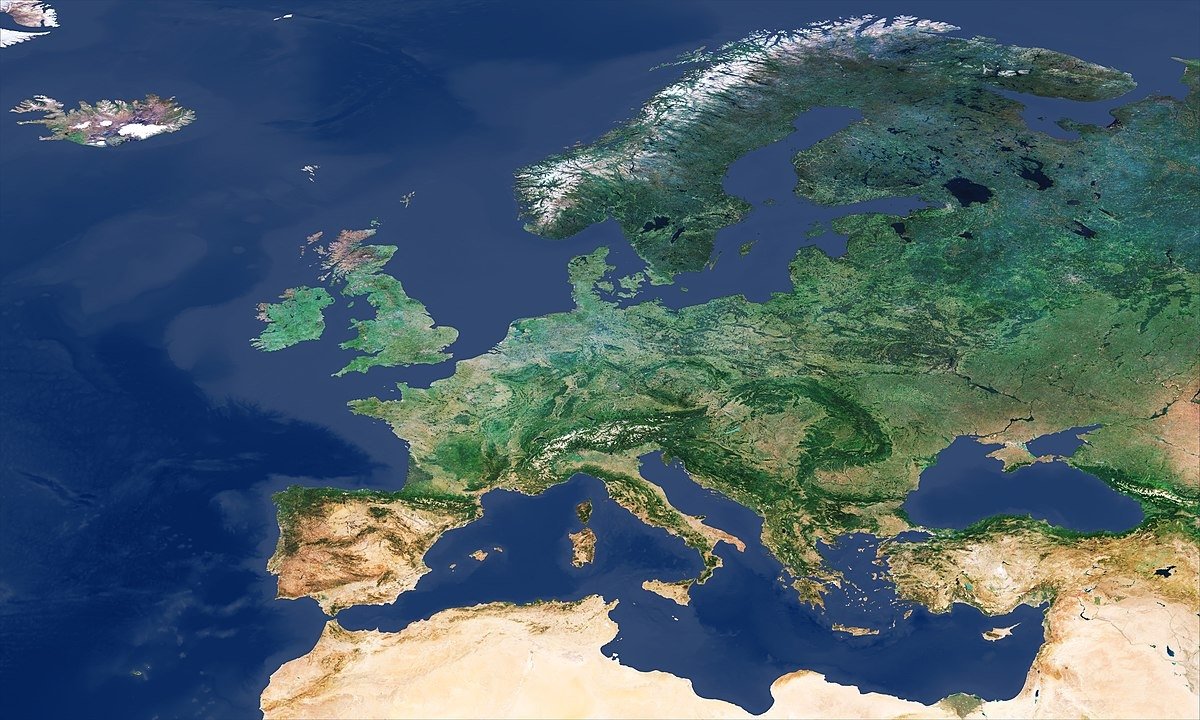
ECO-MOSAIC addresses these challenges by co-developing an open, scalable framework that fuses multi-sensor Earth Observation data, process-based modelling, and advanced AI. The project will generate harmonised, policy-relevant indicators of Species populations, and disturbance, and make them available through interoperable, open-source services. In doing so, ECO-MOSAIC helps bridge the science gap, enabling governments, research agencies, and end users to monitor biodiversity and track progress towards international targets and design more effective climate adaptation and biodiversity conservation strategies across Europe and beyond.
Project aims and objectives
This project is dedicated to advancing the integration of satellite Earth Observation data within situ biodiversity observations to enhance our understanding of climate change impacts on terrestrial species and ecosystems. This project will focus on the technical objectives outlined in the Statement of Work, emphasising using ESA-climate Change Initiative (CCI) datasets and other Earth Observation products to assess the impact of climate change on biodiversity, develop innovative methodological frameworks, and support policy-driven research. Achieving these goals requires a multidisciplinary approach integrating Earth Observation and in situ data, ecosystem modelling, and climate science. A key component of this project is to establish robust methodologies for analysing biodiversity responses through assessing dynamics of Essential Biodiversity Variables to climate variability while ensuring the seamless integration of Earth Observation -derived Essential Climate Variables with biodiversity indicators (e.g., Species distribution). This will involve refining data processing techniques, assessing uncertainties, and improving predictive models
to enhance decision-making. Specifically, this project will leverage key ESA-CCI datasets, including Land Cover, Biomass, Soil Moisture, and Fire, to assess ecosystem responses to climate change extreme events. The project will focus on monitoring the
short-term and medium-term impacts of environmental calamities, such as bark beetle outbreaks and forest fires, on biodiversity as well as long-term responses of the drought resilient species such as Mediterranean pines, depict to persistent pressures i.e. successive dry year. The research will consider both negative consequences and potential adaptive responses within ecosystems. To achieve this, the approach will combine Earth Observation-based analysis with terrestrial monitoring, incorporating citizen science contributions to collect in-situ data. This will enable a more comprehensive understanding of biodiversity shifts in response to historical and ongoing environmental disturbances.
Project plan
ECO-MOSAIC is organised into five tightly connected work packages (WPs) that move from scoping and data preparation to scientific analysis, evaluation, and outreach. The project starts with WP1 Science Requirement Analysis, which identifies knowledge gaps at the climate–biodiversity interface and specifies the technical requirements for integrating Essential Climate Variables and Essential Biodiversity Variables.
WP1 delivers a comprehensive Science Requirements Document that guides all subsequent work.
WP2 Development of the Methodology, Data and Tool Preparation builds an open, cloud-based data and tool repository that adheres to FAIR principles and modern standards (e.g. STAC, ARCO). It compiles and harmonises ESA CCI products, Copernicus data, climate reanalyses, biodiversity records (e.g. GBIF, LUCAS, EVA; https://www.gbif.org/), and other ancillary datasets. Within WP2, modelling workflows and analytical tools are developed, tested, and exposed through interoperable interfaces suitable for large-scale climate–biodiversity analyses.
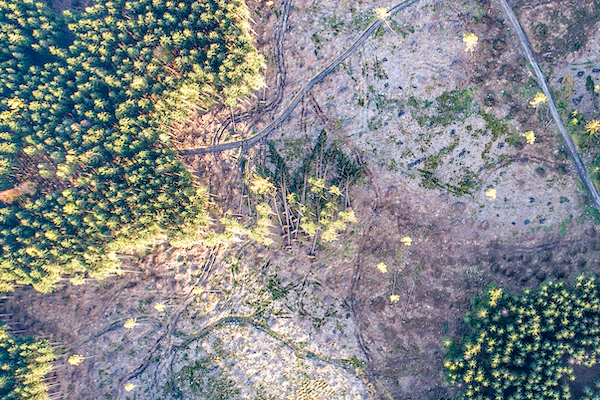
WP3 Main Scientific Analysis applies these tools in three complementary case studies: (1) European temperate forests, focusing on climate variability, bark beetle outbreaks, fires, and their impacts on forest biodiversity; (2) multi-taxa responses in Norwegian communities; and (3) projected range shifts of key tree species in selected Annex I habitats at the northern and southern fringes of Europe. WP3 combines multi-sensor Earth Observation time series, climate data, process-based models, citizen science inputs, and field measurements at reference sites to generate and validate indicators, leading to high-impact scientific publications.
WP4 Evaluation and Roadmap Report assesses the performance, uncertainties, and user relevance of all products and case studies, providing structured feedback to ESA CCI- Essential Climate Variables teams and compiling a five-year scientific roadmap from 2027 onwards, aligned with ESA’s Earth Observation Science Strategy.Finally,
WP5 Management, Outreach, and Communication coordinates the four partner institutions, ensures the timely delivery of milestones, manages risks and data, and leads communication, stakeholder engagement, and dissemination activities, including training materials and guidelines to support the uptake of ECO-MOSAIC workflows and indicators by the wider climate–biodiversity community.