

Summary
The BRIDGE project is positioned at the intersection of remote sensing, ecosystem modelling, forest ecology, and climate science. Its central motivation is the growing scientific and societal concern that forests are becoming less resilient under accelerating climate change and increasing human pressure. The project addresses a major knowledge gap: how to reliably detect, quantify, and interpret changes in forest resilience using complementary data streams and modelling approaches.
The main goal of the BRIDGE project is to develop a set of indicators of forest ecosystem resilience by combining several types of information:
- Earth Observation data from the ESA CCI and Copernicus Land Monitoring Services (CLMS) data store
- detailed climate information from the DestinE Climate Change Adaptation Digital Twin, and
- additional data generated with advanced vegetation models and obtained from field measurements.
By combining these data sources, the project aims to better understand how forest resilience changes over time. Specifically, it will study how forests respond to short-term environmental stress and how their long-term ecosystem dynamics evolve under changing conditions.
Background
Forest resilience refers to the capacity of forest ecosystems to resist, recover from, or adapt to disturbances such as droughts, heatwaves, pest outbreaks, fires, and deforestation. Recent evidence indicates that both tropical and temperate forests are experiencing declining resilience, raising concerns about the long-term stability of ecosystems that are essential for climate regulation, carbon storage, water cycling, biodiversity conservation, and economic production.
In Central Europe, severe droughts over the last decade (2015-2025) have caused extensive forest die-off events. These disturbances have highlighted the fragility of forest ecosystems under warmer and drier climate conditions and intensified the debate around sustainable forest management strategies.
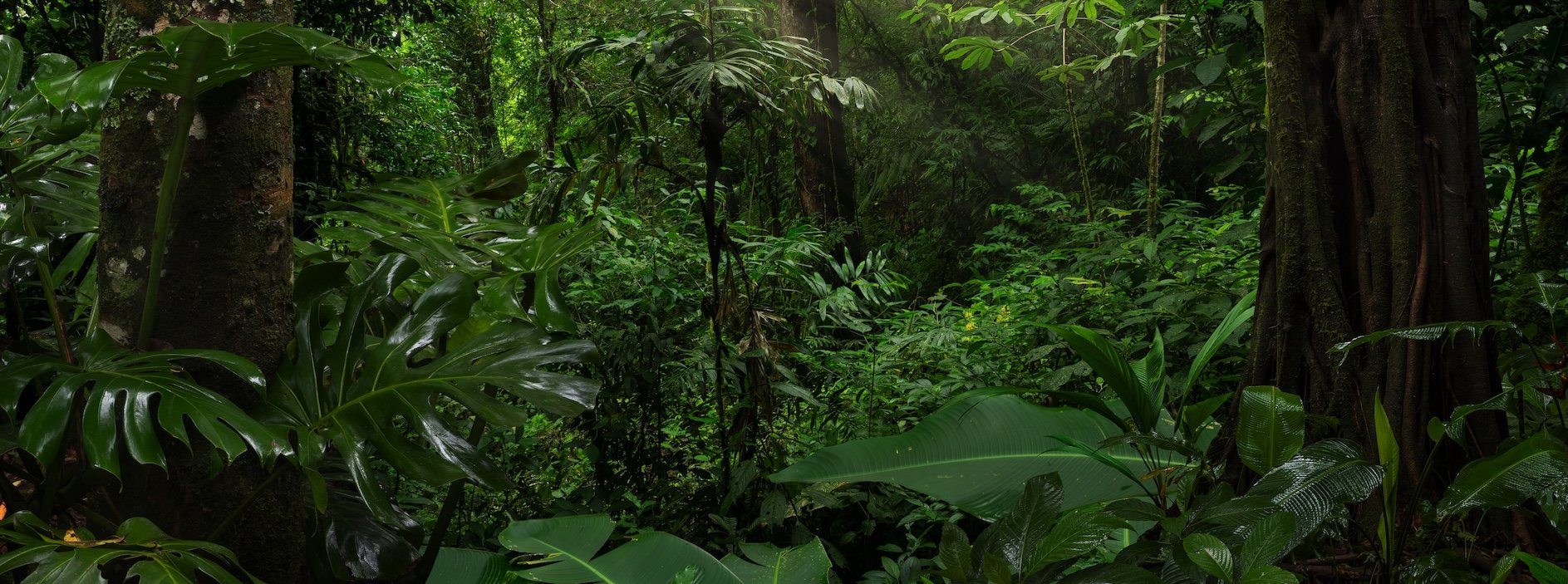
Tropical forests have historically acted as major carbon sinks, but increasing mortality, degradation, and deforestation are reducing their capacity to absorb atmospheric carbon. Elevated atmospheric dryness and intensified drought stress are accelerating tree mortality and ecosystem degradation, with potentially irreversible impacts on global climate regulation.
In this context, the BRIDGE project emerges from the recognition that neither EO data nor ecosystem models alone are sufficient to robustly assess forest resilience. Instead, integrating multiple complementary information sources within a unified analytical framework offers a pathway toward more reliable resilience indicators and improved decision support.
Project aims and objectives
The overarching objective of the BRIDGE project is to develop a suite of indicators for forest ecosystem resilience based on the combined use of:
- multiple EO data streams derived from the ESA CCI and Copernicus Land Monitoring Services (CLMS) catalogues, together with supplementary EO products;
- high-resolution atmospheric climate information provided by the DestinE Climate Change Adaptation Digital Twin; and
- additional datasets generated through advanced dynamic vegetation modelling and in-situ observations.
Through this integrated approach, the project aims to elucidate how changes in forest resilience emerge from altered short-term physiological responses and long-term ecosystem dynamics.
The methodology is demonstrated through use cases representing diverse global forest ecosystems, including temperate and tropical forests, and supported by detailed in-situ measurements. These observations provide a reference for characterizing local-scale conditions and for parameterizing the dynamic vegetation model. Finally, the proposed resilience indicators are designed to address the needs of users and stakeholders through advanced data and digital services integrated within the DestinE Point of Presence of Luxembourg.
Project plan
The BRIDGE project develops a comprehensive suite of forest ecosystem resilience indicators through four interconnected tasks that combine Earth Observation data, ecosystem modelling, climate information, and digital services:
- Identification the Area of Interests, formulation of the forest ecosystem resilience indicators, and selection and harmonisation of a set of EO data streams from the ESA CCI and CLMS catalogues together with additional data sources, atmospheric information from the DestinE catalogue, and in-situ data from the two selected use cases.
- Performing a multi-decadal analysis of environmental variability to identify and disentangle the effects of multiple drivers on ecosystem functioning metrics.
- Development of a workflow for calculating the suite of forest ecosystem resilience indicators based on multiple EO data streams and additional datasets generated by a vegetation demography model using historical and future projections from the DestinE dataset.
- Deployment and testing of the proposed workflow on the technological platform developed in the ESA-funded DestinE Point of Presence project for Luxembourg.