

Antarctica has been gaining ice mass since 2020. That may at first sound like good news but new research funded by ESA's Climate Change Initiative tells a more complex and fragile story: the ice sheet is not losing less ice. It is losing more to the ocean, with iceberg calving up by nearly 100 gigatonnes per year compared to the previous two decades. What is keeping the balance positive – for now – is an extraordinary surge in snowfall.
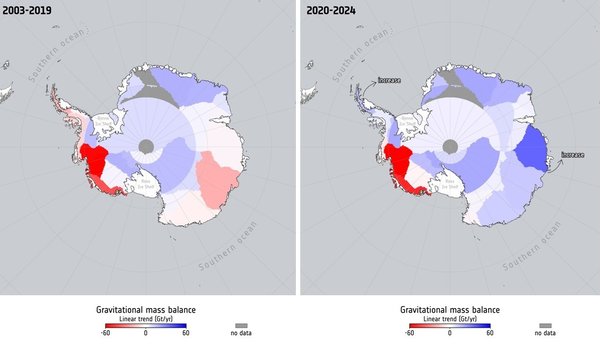
New findings from the Processes for Ice Sheets in Climate models and Earth Observation project, part of ESA's Climate Change Initiative, reveal that the driving force behind the snowfall surge is atmospheric rivers – vast corridors of water vapour that transport enormous quantities of moisture over thousands of kilometres. Since 2020, these rivers have become more frequent and more intense, channelling moisture particularly over East Antarctica's Queen Maud Land and Wilkes Land, as well as the Antarctic Peninsula.
The stakes are high. The Antarctic Ice Sheet holds enough frozen water to raise global sea levels by around 58 metres if it were to melt. Understanding its shifting mass balance is not just a scientific question – it underpins every coastal adaptation plan on Earth.
Read the full story: https://www.esa.int/Applications/Observing_the_Earth/FutureEO/Space_for_our_climate/Why_is_Antarctica_s_mass_increasing