

Summary
The Climate–Health Adaptation through New Generation Earth Observations (CHANGE) is a three-year project that uses Earth Observation (EO) data to better understand and address the health impacts of climate change.
The project integrates multi-source EO datasets with health information, to support research on how extreme events - such as floods, droughts, wildfires, and El Niño–Southern Oscillation (ENSO)-driven anomalies -affect vulnerable populations and health systems.
CHANGE contributes to the objectives of the Paris Agreement and helps close knowledge gaps identified by the Intergovernmental Panel on Climate Change (IPCC), the Lancet Countdown, and World Health Organization (WHO) on climate–health interactions. Through six regional use cases across different continents, the project is delivering a Climate and Health Adaptation Roadmap, providing actionable guidance to strengthen resilience and inform evidence-based adaptation policies.
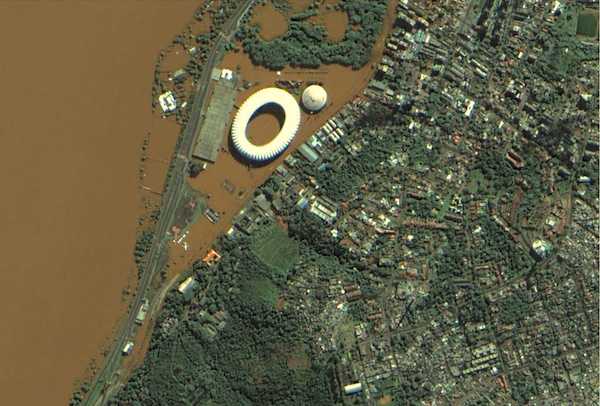
Project background
Climate change is a critical threat to global health, affecting human well-being, health systems, and population stability. International institutions - including WHO, IPCC, UNFCCC, and the G20 Health Working Group - emphasise that climate-related hazards are already driving premature mortality, disease outbreaks, food insecurity, mental health impacts, displacement, and disruption of essential services.
Policymakers urgently require spatially resolved, scientifically robust information to support adaptation planning, monitor risks, and strengthen climate-resilient health systems.
A significant policy challenge lies in supporting the United Nations Framework Convention on Climate Change (UNFCCC) Global Goal on Adaptation (GGA), particularly after the United Arab Emirates (UAE) Framework for Global Climate Resilience established health as a key thematic target. Nations need actionable, evidence-based guidance to assess and reduce vulnerability to climate hazards, yet the data and analytical frameworks to inform these decisions remain incomplete.
This project therefore seeks to close major knowledge gaps identified by the IPCC, WHO, the Lancet Countdown, and the European Commission regarding the climate–health nexus.
Scientifically, the project is responding to the limited integration of EO with health and socio-demographic data. While satellite-derived Essential Climate Variables (ECVs) developed under the ESA Climate Change Initiative provide long-term, global climate information, their potential for assessing climate-related health risks is underexploited. There is a need for rigorous methods to link climate hazards - especially heatwaves, floods, and droughts - with health outcomes and vulnerability dynamics.
Risk assessment is further constrained by incomplete understanding of compound and cascading events, which can amplify health impacts (e.g., flood-related disease outbreaks, drought-heat interactions). Additionally, existing studies often lack thorough uncertainty quantification and validation of models and data, which is essential for credible decision support.
A further scientific challenge is the quantification of the health burden attributable to climate change, comparing factual climatic conditions with counterfactual scenarios derived from climate projections (e.g., CMIP6). This requires accounting for social inequalities, demographic change, and adaptation mechanisms, which modulate both vulnerability and exposure.
Finally, policymakers need operational, evidence-based adaptation roadmaps showing how EO can inform planning, resource allocation, and long-term resilience of health systems. Generating such roadmaps demands the integration of scientific knowledge, climate projections, and satellite-based indicators of risk and feasibility.

Aim
CHANGE aims to show how EO can transform the identification, monitoring, and quantification of climate-related health risks to support resilient health systems and protecting vulnerable communities worldwide.
Key objectives
Integrate Data for Actionable Insights: Combine satellite observations, climate projections, epidemiological data, and socio-demographic information to anticipate health impacts and inform climate-smart decision-making.
Assess Climate–Health Linkages: Analyse how heatwaves, floods, droughts, wildfires, and climate variability affect human well-being, health systems, and population vulnerability, including identifying scientific gaps and necessary technical and methodological requirements for EO to better support climate-health research and policy development.
Develop EO-Enabled Risk Models: Use ESA CCI data records, Copernicus Sentinel mission observations, ERA5 reanalysis and other datasets to map exposure, vulnerability, to predict climate-health threats at high resolution.
Quantify Climate-Attributable Health Burden: Compare current disease risks with counterfactual scenarios to measure the contribution of anthropogenic climate change to health outcomes such as infectious disease incidence, respiratory morbidity from fire emissions, waterborne contamination events, and healthcare system disruptions, while explicitly accounting for social inequalities, demographic trends, and adaptive capacity.
Deliver an EO-informed Climate & Health Adaptation Roadmap: Provide practical guidance aligned with WHO and UNFCCC frameworks to strengthen resilience, improve early warning systems, support extreme-event preparedness and support policy implementation. The roadmap will aim to include intuitive visual tools and satellite-based indicators.
Apply Knowledge in Real-World Cases: Conduct six case studies on climate-sensitive health challenges:
- E. coli contamination in UK bathing waters
- Leptospirosis outbreaks in Brazil
- Malaria transmission shifts in Sudan and South Sudan
- ENSO-driven dengue and leptospirosis in Sri Lanka
- Respiratory impacts from large wildfires
- Flood-related disruptions to health services in South Sudan

Promote Open Science and Global Collaboration: Maintain transparency and long-term impact through open repositories, peer-reviewed publications, and partnerships with WHO, International Centre of Insect Physiology and Ecology (ICIPE), National Institute for Space Research (INPE) in Brazil, and the Environment Agency (EA) in UK.
Project plan
The CHANGE project is organised into the following six work packages:
- Project Management and stakeholder engagement with organisations such as WHO, ICIPE, EA, and INPE.
- Climate & Health Assessment where a state-of-the-art (SOTA) analysis will identify the most relevant climate–health risk pathways, key knowledge gaps, and priority domains for further investigation in the project.
- Climate-Health Case Studies to demonstrate the added value of EO in addressing climate–related health risks across a range of hazards, health outcomes, and geographical contexts.
- Health Impact Attribution to estimate the health burden attributable to climate change and social determinants by quantifying health outcomes in both the real world and a counterfactual scenario.
- Climate & Health Adaptation Roadmap to translate the outputs of WPs 1–4 into policy-relevant, adaptation-oriented actions, providing an evidence base for future adaptation and policy planning
- Outreach, communication and open repository.